Update 11: A Lesson in Resilience from the Gervaises

This holiday season, I had hoped to have exciting news to share. As you know, I’ve been working hard all year to complete the research phase of the project. Unfortunately, the Little Canada Historical Society’s (LCHS) grant application to fund writing the manuscript was not funded—on very questionable grounds.
The Gervaises dealt with disappointment time and again. Now I am looking to their resilience and adaptability to guide myself through a moment of severe disappointment.
In this final update of 2025, you’ll also find a new plan for 2026, a research update, and some end-of-year humor.
Gratitude
First, I want to say thank you to everyone who has supported the project over the past year. Whether you gave time, money, research assistance, lodging, family stories and artifacts, feedback, credibility, or just your enthusiasm, it all helped. You are very much appreciated.
Unfortunately, while you and I know we’ve built an incredible coalition—and tons of momentum—over the past 12 months, the grant review committee did not see it. Here’s what went down.
Grant Review
As I stated in the post preview text, the grant to fund the writing phase in 2026 was rejected—on very questionable grounds. Here’s what happened.
In July, LCHS submitted a pre‑application—essentially a draft version of a complete proposal—for a large Cultural Heritage Grant (which distributes funding from the Legacy Amendment). Grants Office staff reviewed all pre‑applications and offered suggestions to help each organization strengthen its final submission. LCHS incorporated that feedback, revised the proposal, and submitted the full application in September.
Applications requesting more than $20,000 are evaluated by the Historic Resources Advisory Committee (HRAC), an independent group of volunteers from museums, archives, and historical societies across Minnesota. In October, the HRAC reviewed 76 applications representing every corner of the state and every type of project—research and writing, exhibits, preservation work, capital repairs, and more. Members scored each application individually before meeting as a group to discuss and finalize their recommendations.
As I mentioned in an earlier update, our timing could not have been worse. A recently discovered 15‑year‑old accounting error left the Legacy fund dramatically short this cycle. Instead of the usual $6–7 million available for large grants, only $3.8 million was available. Meanwhile, organizations submitted more than $11 million in requests. Thus, from the outset the HRAC knew it could fund only about one‑third of the proposals.
Even so, I believe LCHS submitted a very strong application. In November, the HRAC held a two‑day public meeting, which was streamed online, to discuss the projects and finalize its slate of recommended awards.
Unfortunately, the public review of our proposal was deeply discouraging. It was not simply a matter of tough criticism; the discussion revealed several misunderstandings and misapplications of the grant program’s own rules that materially affected how it scored LCHS’s proposal. Some committee members did not recognize the project’s deep primary-source research or its potential contributions to scholarship. And rather than being excited by the dramatic narrative set forth in the narrative outline, the committee fixated on the project’s ambitious scope and vision, which they were hesitant to support.
I’m no stranger to critique. In my career as an exhibit developer, I received constant feedback on my writing and interpretive ideas, and I’ve always welcomed it. I don’t have an ego about my work, and want the best idea to win whether it’s mine or somebody else’s. But I do care deeply about fairness, and I expect criticism—especially in a competitive grant process—to be grounded in the actual application materials and in the program’s stated criteria.
I don’t share the following complaint to “air dirty laundry,” but because I believe you, my supporters, deserve to understand why the review was so painful to watch, and why the LCHS Board of Directors took the unprecedented step of filing a formal letter of protest with the Grants Office.
In brief, the HRAC:
Misunderstood state hiring laws, and scored the project lower based on false assumptions about the legal requirements LCHS is obligated to follow.
Applied criteria not found in the official Grants Manual, including expectations that LCHS (and other applicants) were never told to address.
Questioned LCHS’s ability to manage funds solely because of its small annual budget—despite no evidence of mismanagement in its 48‑year history and despite the HRAC’s mandate to support organizations of all sizes.
Overlooked major components of LCHS’s application, including a 96‑page annotated bibliography and outline that one committee member implied did not exist, as well as letters from two Ph.D. historians advocating for the project’s scholarly value and two draft chapters that demonstrated deep research and sharp writing.
Applied a double standard to contractor pay, holding historians to a far more restrictive standard than other professional contractors (architects, exhibit firms, tradespeople, etc.). The committee dismissed market‑rate proposals which LCHS solicited from three independent historian‑writers and instead suggested compensation levels far below professional standards.
Minimized the scope and significance of the project, at one point suggesting the book could be completed for $3,500 or replaced with a small exhibit.
Discounted the support of numerous scholars and partner organizations, including a dozen Ph.D. historians, the City of Little Canada, and multiple cultural and historical institutions in both the U.S. and Canada. One member suggested LCHS needs to “find some community partners” so the project looks less like a “vanity project”—as if the list above is not sufficient.
The LCHS Board found these issues serious enough to warrant a formal protest. It requested a second review by Grants Office staff or another neutral body.
Just before Christmas, the final decision was announced: the project will not be funded this cycle. The Grants Office cited the Legacy funding shortfall and the competitiveness of the pool.
It is unclear whether the concerns raised in LCHS’s protest were addressed; historically, the MNHS Board of Directors has always approved the HRAC’s slate as a matter of course, and there is no established process for handling situations where an applicant believes the review was fundamentally flawed. My guess is that Grants Office staff decided it was easier to address LCHS’s complaints in the future—by improving standards and clarity for the 2026 round—rather than upsetting the process retroactively this round. (Funding LCHS’s proposal after the HRAC had already publicly selected its slate of recommended projects would mean taking all-but-assured money away from one or more other organizations.)
All of that said, we are moving forward. LCHS will meet with Grants Office leadership in January to discuss how the application might be strengthened if it chooses to reapply in 2026 for funding in 2027.
In the meantime, life goes on.
A New Plan for 2026
It might come as a surprise to some, but I have housing, food, healthcare, and childcare expenses and need an income. Instead of turning directly to writing in February, as was the plan if the grant had been funded, LCHS and I have formulated a new plan for 2026.
1. Funding
LCHS is doubling down on its efforts to find alternative sources of funding. We’ll be looking for other grant opportunities, private donors, family foundations, and so on. But nothing is guaranteed. I may step away from the project for a bit to pick up other paid work.
In the worst case, the project is delayed by a year and LCHS will apply for the same grant in the next cycle. In that case, the application should be all but unimpeachable and there will be more Legacy funds available.If you know someone who might be interested in the project, please tell them about it! If you have friends who are independently wealthy, please invite them to support this groundbreaking project! If you have ideas about grant opportunities we might not have thought of, please let us know!
2. Additional Research
On the original timeline, I planned to wrap up research by the end of January 2026 and switch to writing once grant funding commenced in February. The reality here has changed.
To be honest, I did fall a bit behind schedule in December. I was so despondent and angry about how the grant application was handled that it was hard to keep forward momentum. All that work, only for its value to be completely ignored! I’ve since recovered and am optimistic about 2026. There is more research to do. As anyone who has done this kind of work can tell you, research could go on forever. I prioritized records that promised the best return on my time. But there are other records out there that could still provide useful context, and collections where the Gervais family may unexpectedly appear. I’ll keep digging and keep providing regular monthly updates. That said, my top priority in January and February has to be finding funding. I’ll be spending more time on grant applications, solicitation letters, and so on. Research—and maybe a little bit of writing—will fill the remaining time.
3. French Heritage Corridor Conference
On May 29–30, 2026, you’re invited to attend the annual French Heritage Conference, a two-day event that mixes scholarship, public discussion, and tourism. This year’s event will be held right here in the Twin Cities. I will have an important role (exactly what is TBD). Right now, I am participating in the planning committee, helping to nail down the conference venue and French heritage tour route. Little Canada is guaranteed to be a destination.
Recent Research Finds
The last major collection at the Minnesota Historical Society that I knew I needed to examine was the Henry Hastings Sibley Papers. I’ve been steadily working through that collection. I have not made any major breakthroughs regarding the Gervaises—just one direct mention that adds nothing I didn’t already know—but there is a lot of great context to be found in the Sibley Papers.
I believe the Gervais family’s failure to appear in the Sibley Papers more than once is implicit evidence about their beliefs and life strategy. I think they deliberately stayed away from the fur company. They had extensive experience with the North West Company, the Hudson’s Bay Company, and the Red River Colony. I believe the lesson they learned was that it was better to be self-sufficient than to take on debt with a trading company. And in any case, as the Sibley Papers show, money was very tight in the late 1830s. The U.S. was in the middle of a long depression in the wake of the Panic of 1837.
The Sibley Papers also provide the following information I plan to weave into the narrative:
When and how news of the Canadian Rebellions of 1837–8 was received in pre-territorial Minnesota.
Evidence that whiskey dealers on the east side of the Mississippi brought a formal lawsuit against Indian Agent Lawrence Taliaferro [pronounced Tolliver]. This was the conflict that ultimately led to the Gervaises and other settlers being evicted in May 1840 and having their homes razed. Chapter 11 of my book dives deep into this conflict, since, in addition to its serious consequences for the Gervais family, it was the key event that led to the development of twin cities along the upper Mississippi. But I did not know the east-side tavernkeepers filed a lawsuit after the fact. The Sibley Papers also provide definitive evidence that Indian Agent Taliaferro was indeed responsible for vandalizing the whiskey shop in September 1839. He later denied responsibility, so my previous interpretation did not assign blame. It was a case of conflicting accounts with no definitive proof. Now it is clear that both Major Joseph Plympton and Indian Agent Taliaferro were involved in corrupt, illegal schemes that combined to throw the Gervaises and other families off their land.

Additional information about voyageur and Red River ox-cart driver Joseph Gobin. He was an acquaintance of the Laurance family dating back to 1816, and two of his daughters later married Gervais sons, one in 1847 and one in 1866. Gobin was involved in a number of significant moments in the development of the ox-cart trains, including being suspected of committing a murder along the trail.
Much more detail about the 1844 ox-cart brigade, which included Genevieve’s brother Charles. It is now clear that this brigade, led by Peter Garrioch [pronounced Garrick], was the largest, best organized ox-cart train yet. It represents the moment when Red River traders and St. Louis merchants definitively established long-lasting commercial bonds. The Sibley Papers offer details about why this brigade did not follow the usual trail back to Red River on their return. Some Sisseton Dakotas had killed an American cattle driver in a botched attempt to steal the animals. Around the same time, Red River Métis clashed with other Dakota farther north, killing several Dakota men. Thus, the Minnesota and Red River Valleys were not safe that fall. As a result, the cart brigade was forced to cut a new trail, now known as the Woods trail, through the dense forests of Ojibwe country. Genevieve’s brother Charles was a key member of this brigade and surely stopped to visit his sister in Little Canada along the way.
Details about mail and newspapers in the 1830s and 1840s. Ben and Gen still had family in Quebec and Red River. Documents and complaints about mail shipments and deliveries as well as subscriptions by literate elites to newspapers in Chicago and Madison demonstrate the flow of information in early Minnesota. Although the Gervaises were illiterate, it was common for such people to ask a priest or educated patron to draft a dictated letter on their behalf. Although we lack overt evidence of this, we can infer it was the case. For example, Benjamin’s brother Louis Pierre, who lived in Champlain, New York, had to find out one way or another that his brother was securely established in Little Canada.
While Father Galtier called Benjamin Gervais and Vital Guerin “good, quiet farmers,” the Sibley Papers contain a warrant signed by Sibley in October 1840 to arrest Guerin for selling liquor without a license.
The first Minnesota Territorial Supreme Court was made up of three justices. All three received their positions through political patronage rather than proven legal acumen. Two of the justices quickly found themselves in hot water for personal and professional misbehavior. The Sibley Papers offer insights into their personalities, as well as political battles about their places on the bench. This is relevant to us because Benjamin Gervais was plaintiff in the very first case to be heard by the court.


What’s in a Name
To counteract the negativity above, I want to end the year on a silly note. The past is full of unique and interesting names, and several uniquely-named individuals have popped up in my research.
William Williams
A former ship’s captain in the East India Company, appointed Hudson’s Bay Company’s Governor of Rupert’s Land in 1818. Williams was also the married 48-year-old man who in April 1819 solicited Genevieve’s 17-year-old sister Julie to be his traveling sex toy. (In a moment of sublimely inverted power, she declined.)
Sommerville Twelve Hudson
Hudson was the initial guardian assigned to manage the property confiscated in early 1818 from the apartment Genevieve’s mother had been renting and in which Genevieve lived with her mother and sister. He signed his name “S. Twelve Hudson,” and apparently went by “Twelve” in everyday conversation.
George William Featherstonehaugh
The first-ever U.S. government geologist, Featherstonehaugh explored the Minnesota and Red River Valleys in 1834 and soon thereafter published an official report. (Useful to me as a contemporary view of the landscape the ox-cart trains traversed.) Let’s be honest. This is just a ridiculous surname. Letters from contemporaries suggest it was pronounced fan-shaw. ALL THOSE LETTERS = fan-shaw? SMH.
Pierre “Pig’s Eye” Parrant
If Pig’s Eye was only a nickname for an obscure person, it wouldn’t be worth mentioning here. But the name has a mythology attached to it, the myth of a crude, cantankerous, whiskey-dealing voyageur whom early historians credited as the “founder” of St. Paul. His real name was Pierre Parrant. A knife fight left Parrant with a hideous scar over one eye, so other voyageurs nicknamed him L'Oeil du Cochon (“Pig’s Eye”).
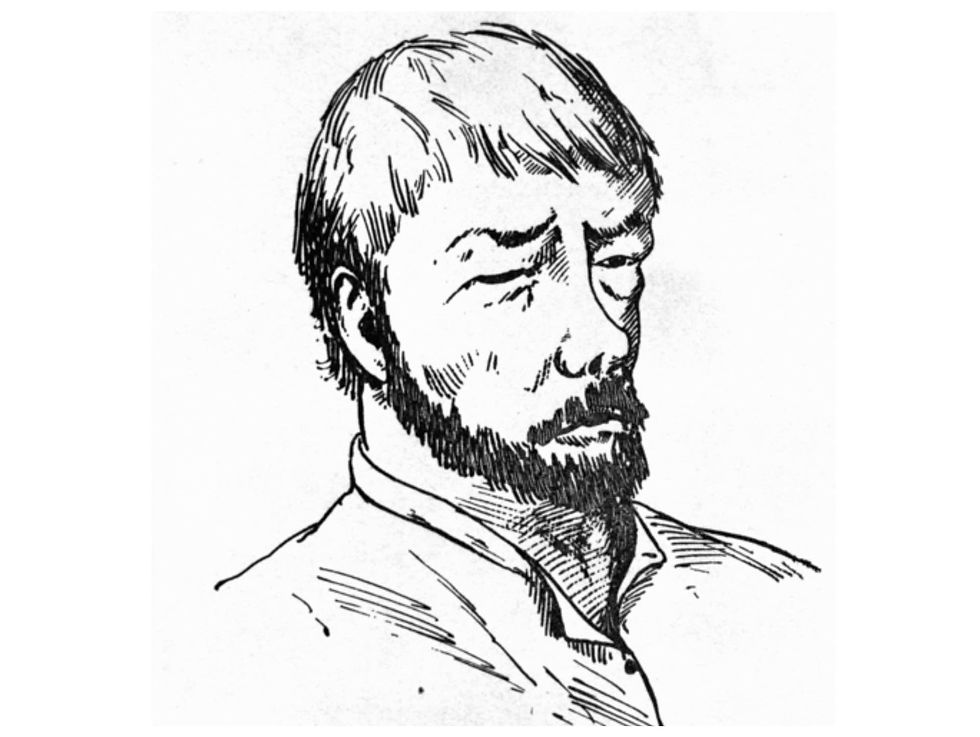
The myth holds that Parrant was the first settler in modern St. Paul and that his name was used to refer to the settlement. My book will contend that most of the myth is not supported by primary sources.
The next two names aren’t unusual. They are too usual!
Jean-Baptiste
I get it: John the Baptist was an important Biblical figure, and St-Jean-Baptiste Day has morphed from Catholic feast day to ethno-nationalist celebration in Quebec. It’s great to honor these things in a child’s name. But come on, for the sake of village life, couldn’t French Canadians come up with any other male name? Jean-Baptiste is the name of the fathers of both main characters. Ben and Gen each had a surviving brother named Jean-Baptiste. They had a son named Jean-Baptiste. Don’t get me started on all their cousins.
Genevieve
The female equivalent in these families is Genevieve. Not only do we have our protagonist, but she had aunts, cousins, and in-laws named Genevieve. They were all named for Saint Genevieve, patron saint of Paris. The village and church of Benjamin’s birth were named after the saint—Sainte-Genevieve-de-Batiscan—as was the church in Berthier where Genevieve was baptized. A later church in Centerville, Minnesota, where Ben and Gen’s son Alphonse was an early settler, was also named Saint(e) Genevieve. It’s honestly a miracle that the churches of St. Paul (in St. Paul) and St. John the Evangelist (in Little Canada) escaped the fate of being called Saint Genevieve.
Here's to a happy—and well-funded—2026!


Comments